Manage your health easily. (tagline)
Trusted by the best (placeholder)

Why SPPD?

Medical Records Management
Pulse diagnosis has been a cornerstone of traditional Chinese medicine for millennia,
yet it lacks objective metrics. Recent advances in computer vision facilitate the
digitalization and decoding of pulse data from video recordings, opening new avenues
for objective monitoring and quantitative diagnosis.

Diagnosis Assistance
We present a Pulse Digitalization and Diagnosis (SPPD) system, a non-contact platform that utilizes consumer-grade smartphone cameras to capture wrist pulse data. The SPPD identifies
six predefined anatomical points, enabling standardized video acquisition, frame-wise
stabilization, and Kalman-filter-based trajectory tracking. From each point, the SPPD
extracts three signal modalities, including Waves, Velocity, and Flow, from which key
features such as frequency, amplitude, and bilateral asymmetry are derived.

Personalized Treatment Plans
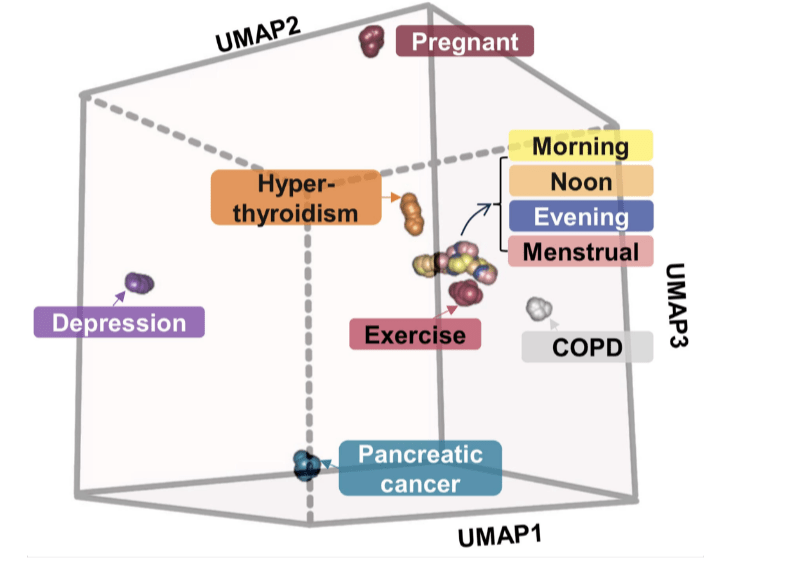
Using SPPD, we delineated characteristic pulse signatures across diverse physiological states
(normal rest, exercise, menses, pregnancy), and pathological states (hyperthyroidism,
depression, pancreatic cancer, chronic obstructive pulmonary disease). Moreover, the
SPPD detected dynamic individual pulse changes in response to acute altitude
elevation (> 3,800 m). These high-dimensional pulse features revealed distinct spatial
clusters via uniform manifold approximation and projection (UMAP). Collectively, the
SPPD offers a scalable approach for objective pulse assessment, enabling digitalized
health monitoring and facilitating disease detection.
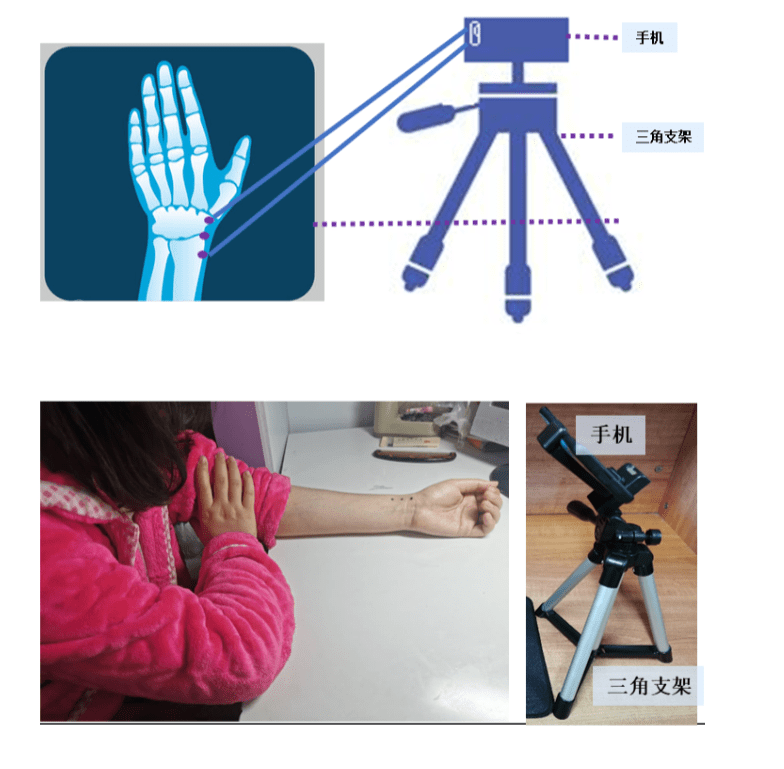
Placeholder description of approach
A mobile phone + a fixing device (tripod)
一部手机+固定装置(三脚架)

Conditions and diseases have already been studied:
Pregnancy
Depression patients抑郁症患者
Hyperthyroidism 甲状腺功能亢进症
Pancreatic cancer 胰腺癌
Chronic obstructive pulmonary disease (COPD) 慢性阻塞性肺病
These conditions can be separated based on pulse position, velocity, and flow
pattern in a three-dimensional graph.
 SmartPhone-based Pulse Digitalization and Diagnosis (SPPD)